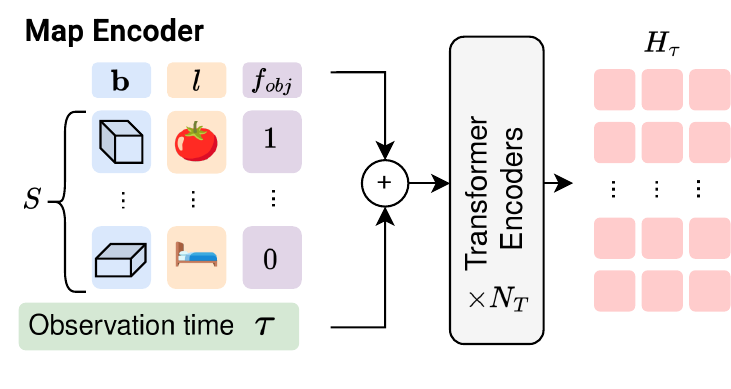
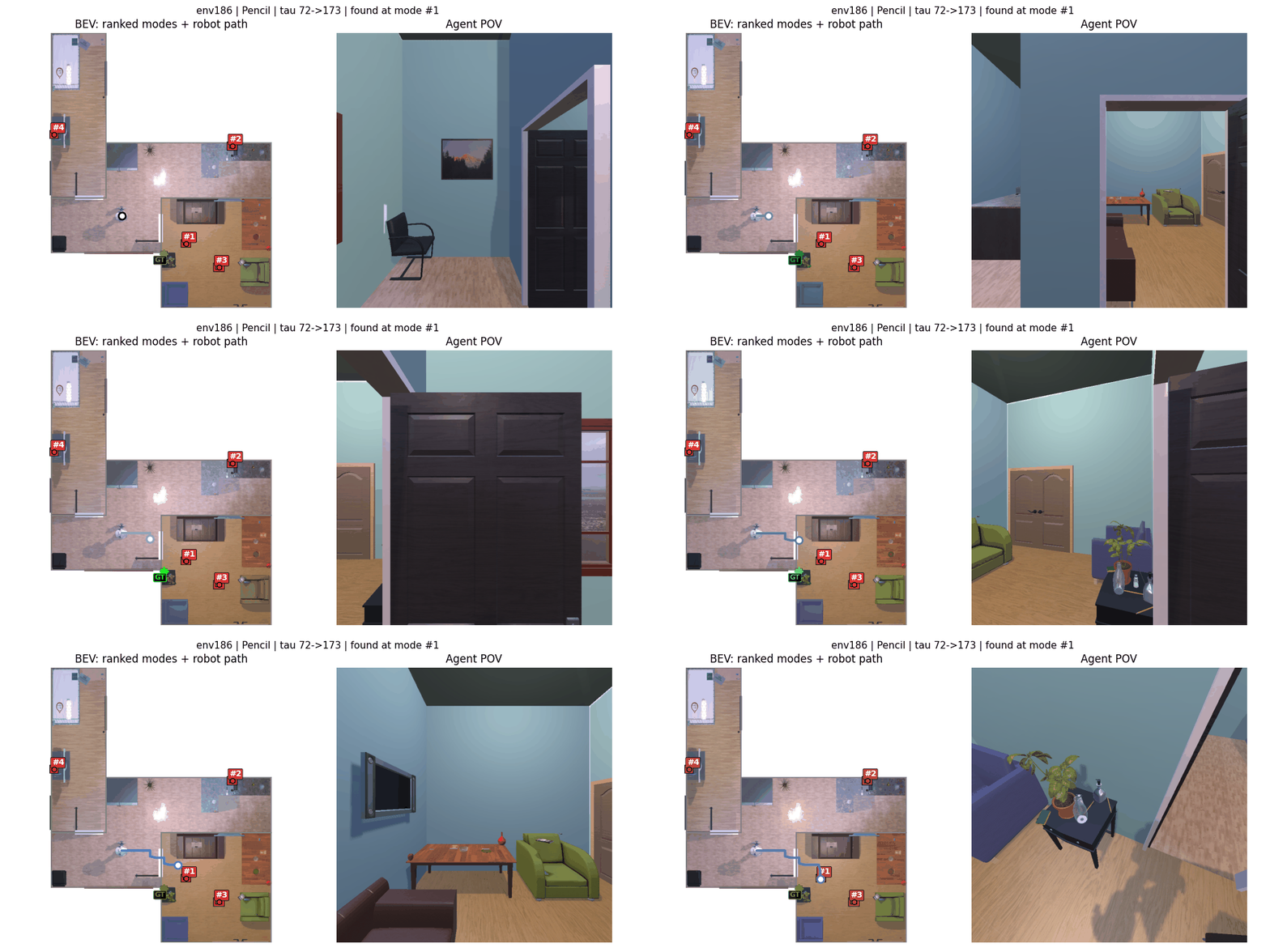
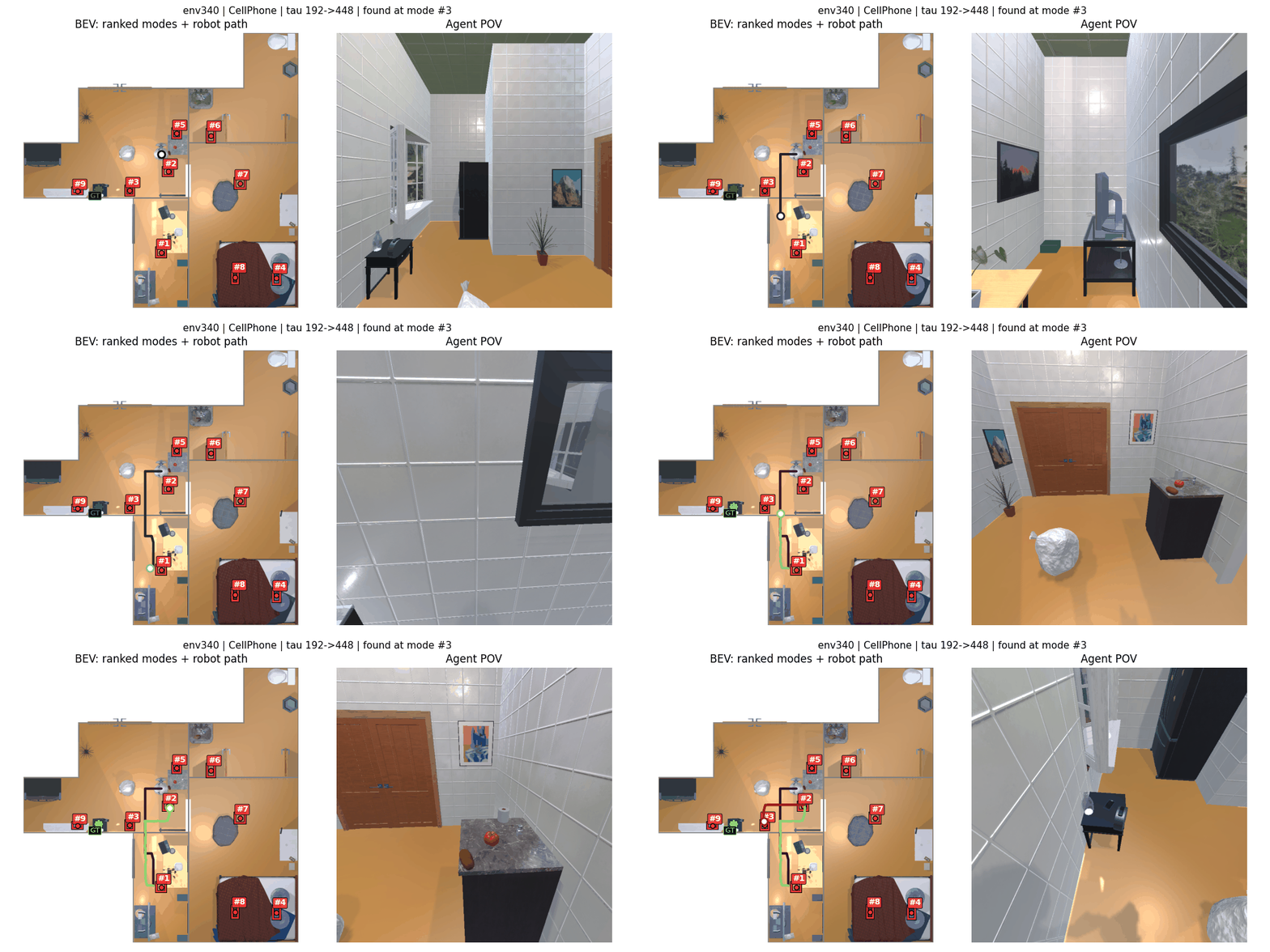
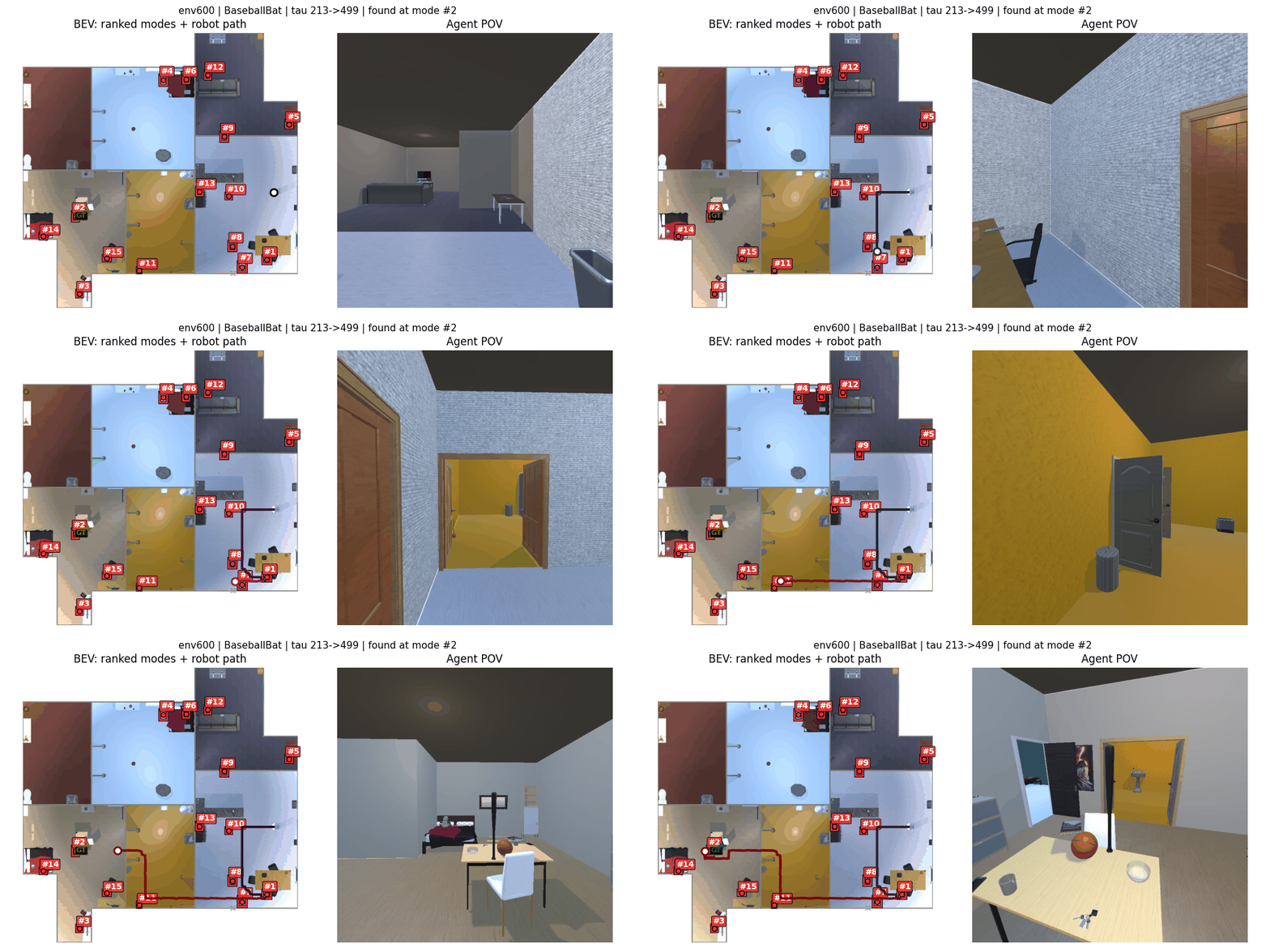
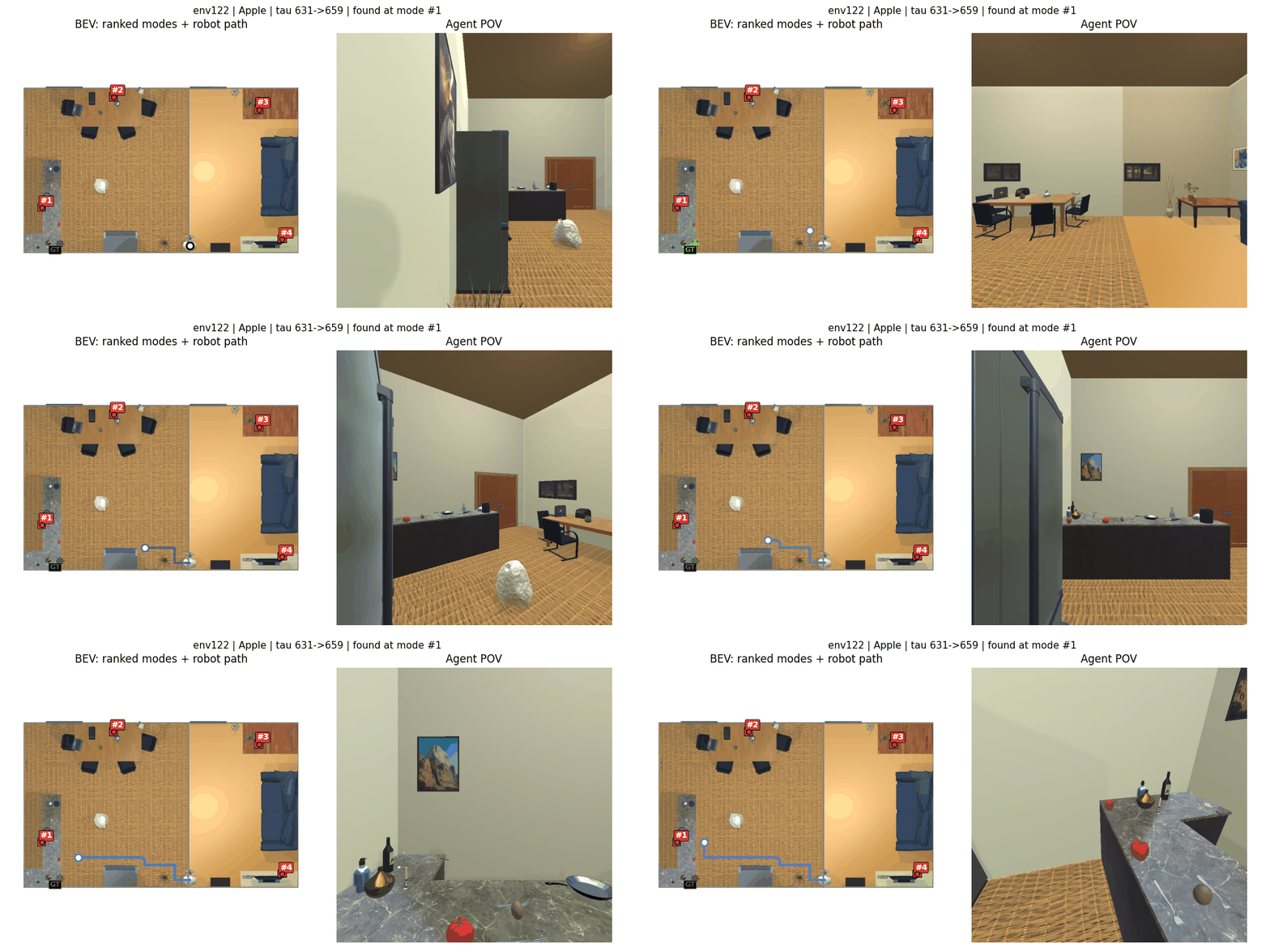
Overview of FlowMaps. A latent flow matching model that, given the current scene Mτ, a queried object label lq and a future time τf, transports a Gaussian latent into a distribution over the object's plausible future bounding boxes. The decoded predictions guide a robot toward where the object is likely to be found.
Joint spatial and temporal understanding of 3D scenes is a crucial requirement for robots deployed in everyday household environments. Such agents must not only comprehend and navigate spatial layouts, but also reason about how these spaces evolve over time. In particular, humans interact with objects daily, causing them to change position throughout the environment and making it difficult for robots to reliably associate current observations with previously seen objects. However, these interactions are not random: human habits and routines induce spatio-temporally consistent patterns in object locations, which robotic agents can potentially learn and then exploit for downstream tasks such as navigation. To this end, we introduce FlowMaps, a latent flow matching model for estimating multimodal distributions over the future locations of dynamic objects in a continuous 3D space. By learning the implicit dependencies among objects and their temporal evolution, FlowMaps predicts likely changes in object locations conditioned on past human interactions, while supporting generalization across previously unseen environments that share similar object routines. To demonstrate the utility of this method, we deploy FlowMaps in a downstream dynamic Object Navigation task in both simulated and real-world environments. Across more than 600 episodes, FlowMaps outperforms state-of-the-art approaches, showing that modeling object dynamics through continuous, multimodal spatio-temporal distributions improves robotic search and navigation in changing household environments.
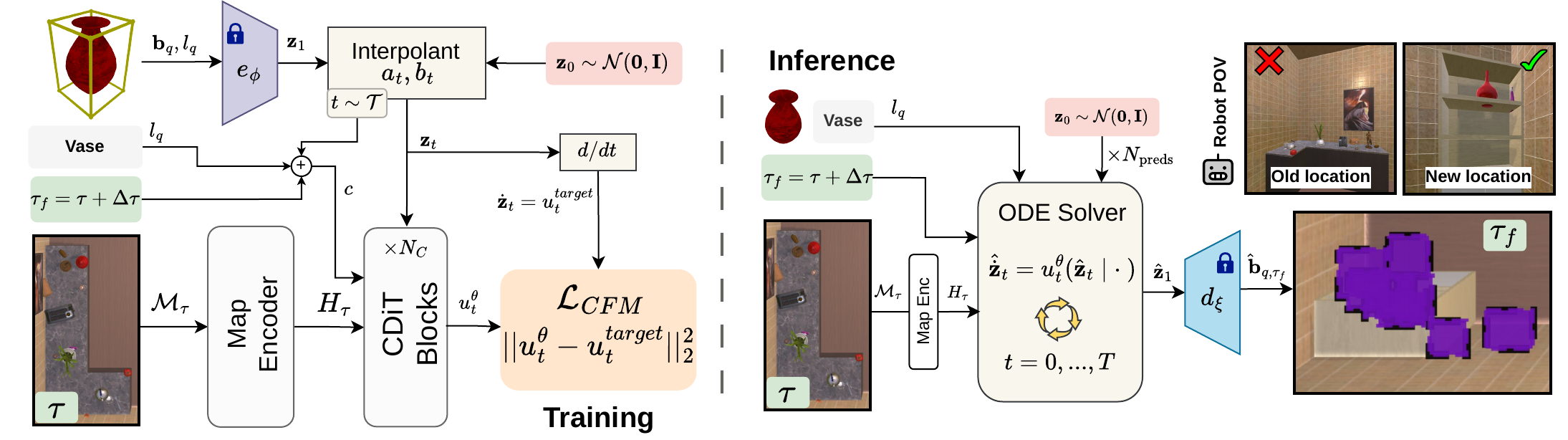
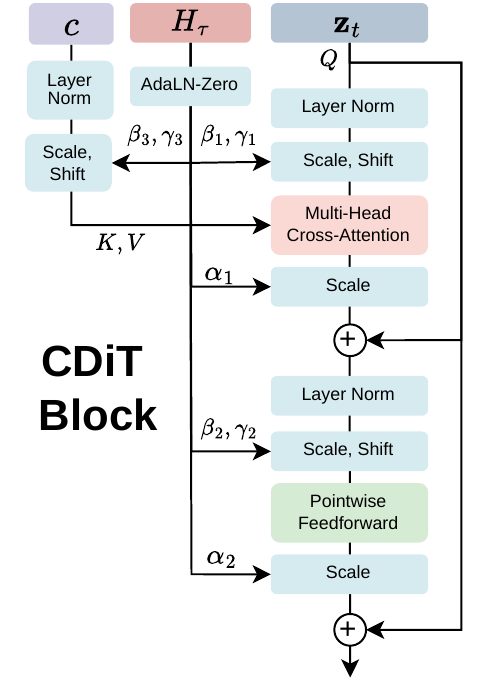
FlowMaps approximates the intractable posterior over an object's future location with flow matching in a learned latent space. It is composed of two modules:
Left: the permutation-invariant map encoder turns the scene into context tokens Hτ. Right: a CDiT block refines the query latent via adaLN-modulated cross-attention to the scene context.
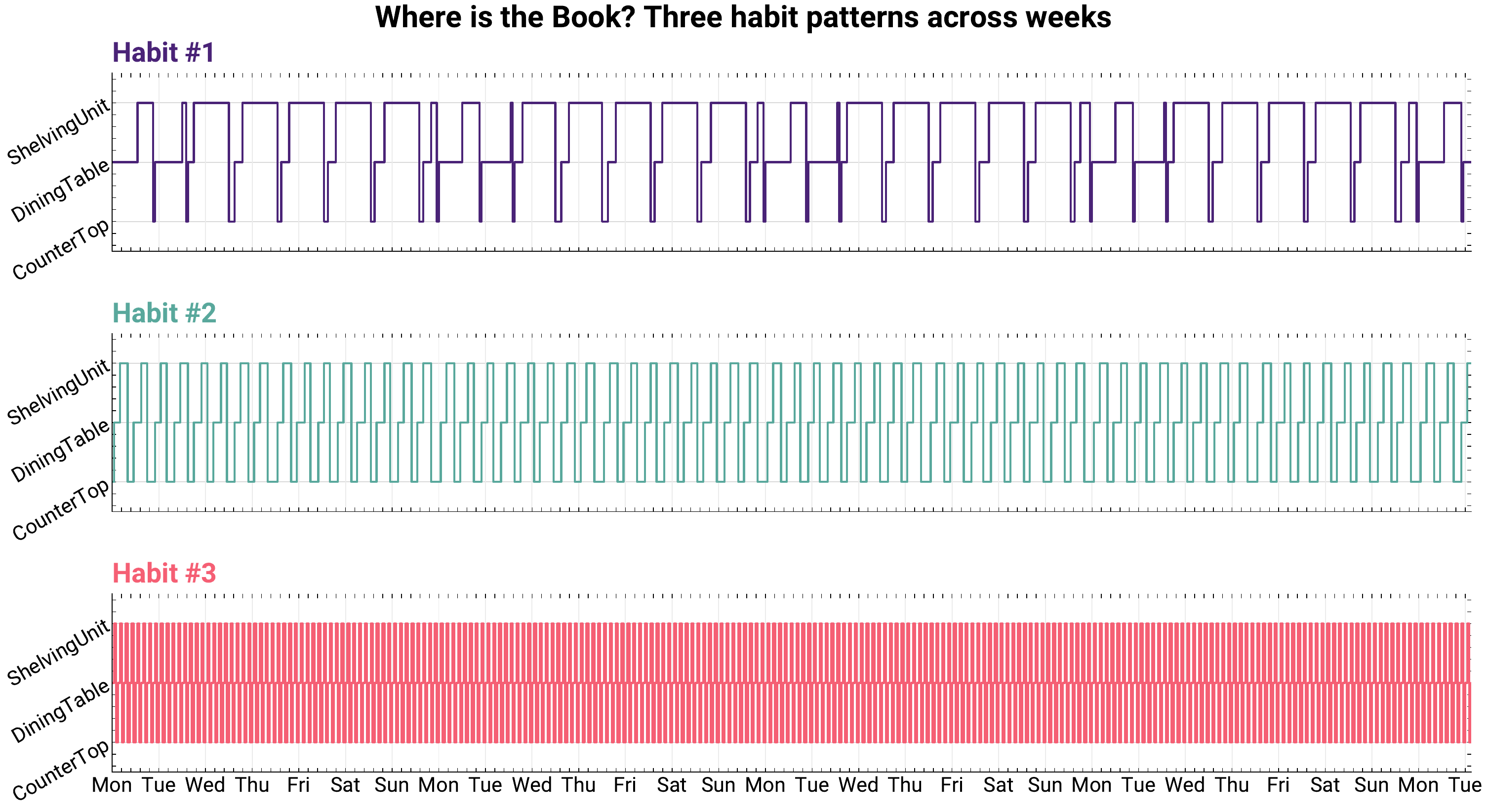
Object movements are not random — they follow recurring human routines that produce semantically consistent patterns. We use ProcTHOR to generate dynamic indoor environments driven by three representative habits: location preferences (returning to a few favoured places), a balanced routine (time spread uniformly across locations), and a highly dynamic routine (frequent transitions). A separate FlowMaps model is trained per habit.
The location of a single object (a book) across weeks under each of the three modeled habits.
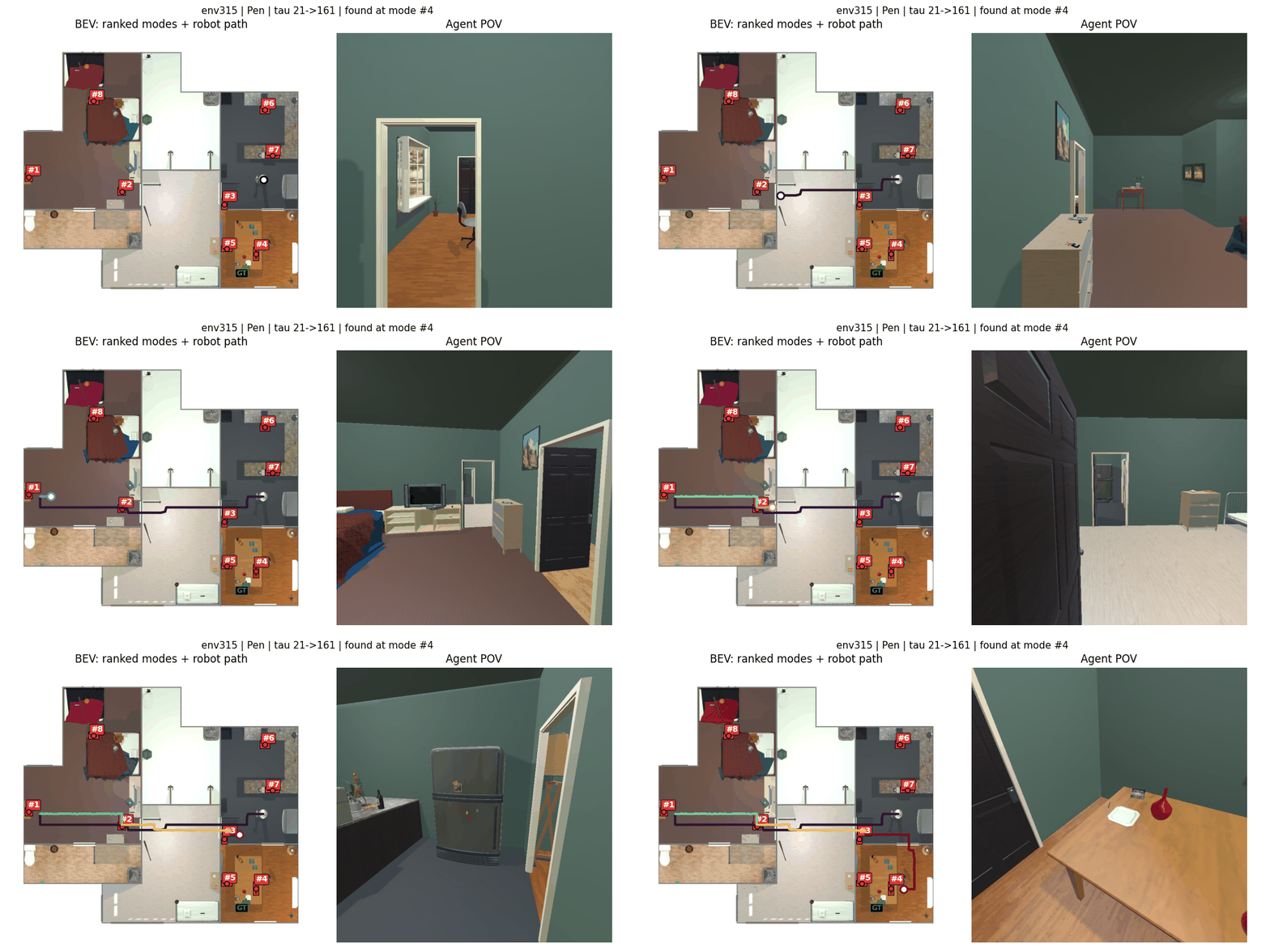
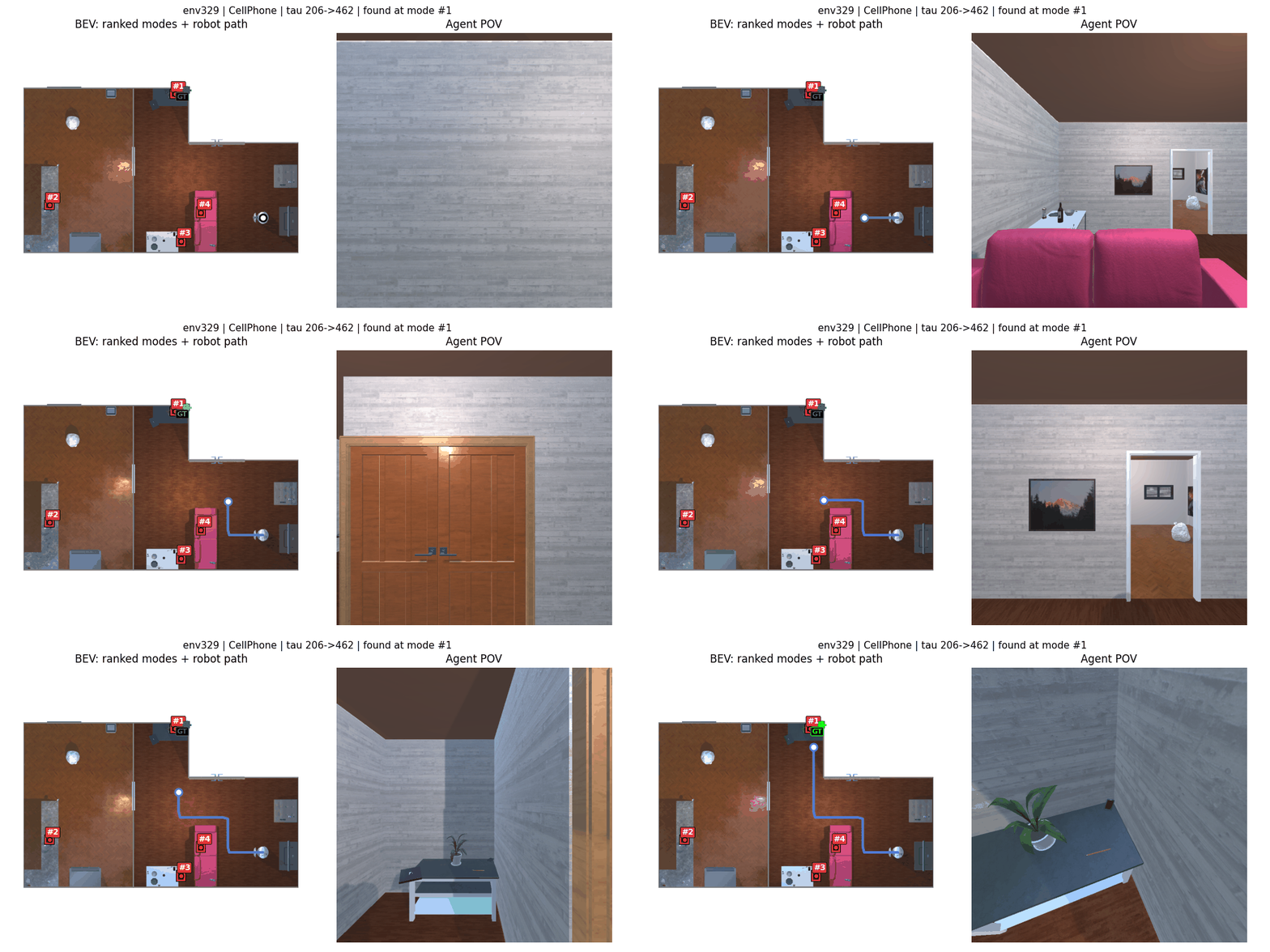
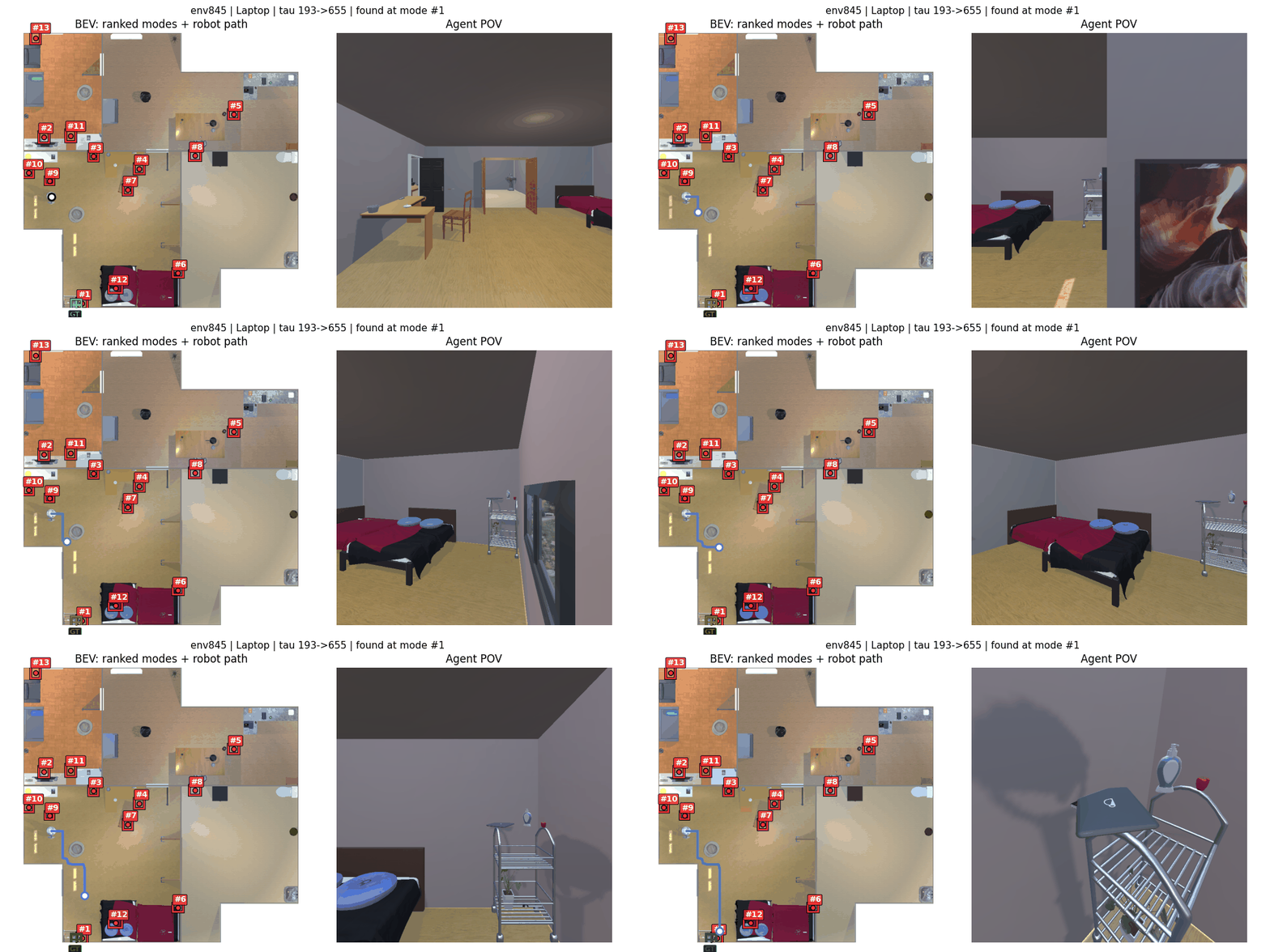
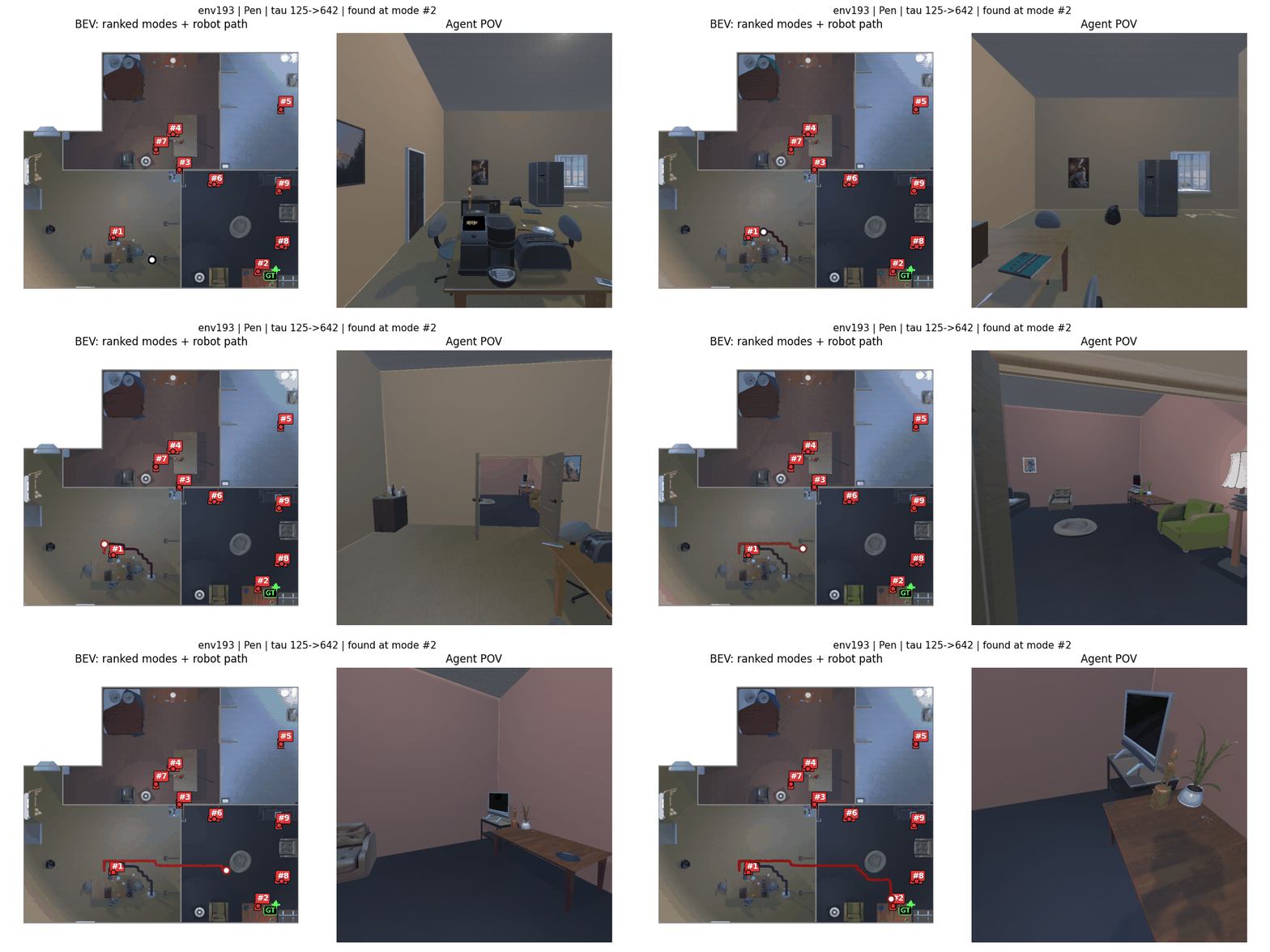
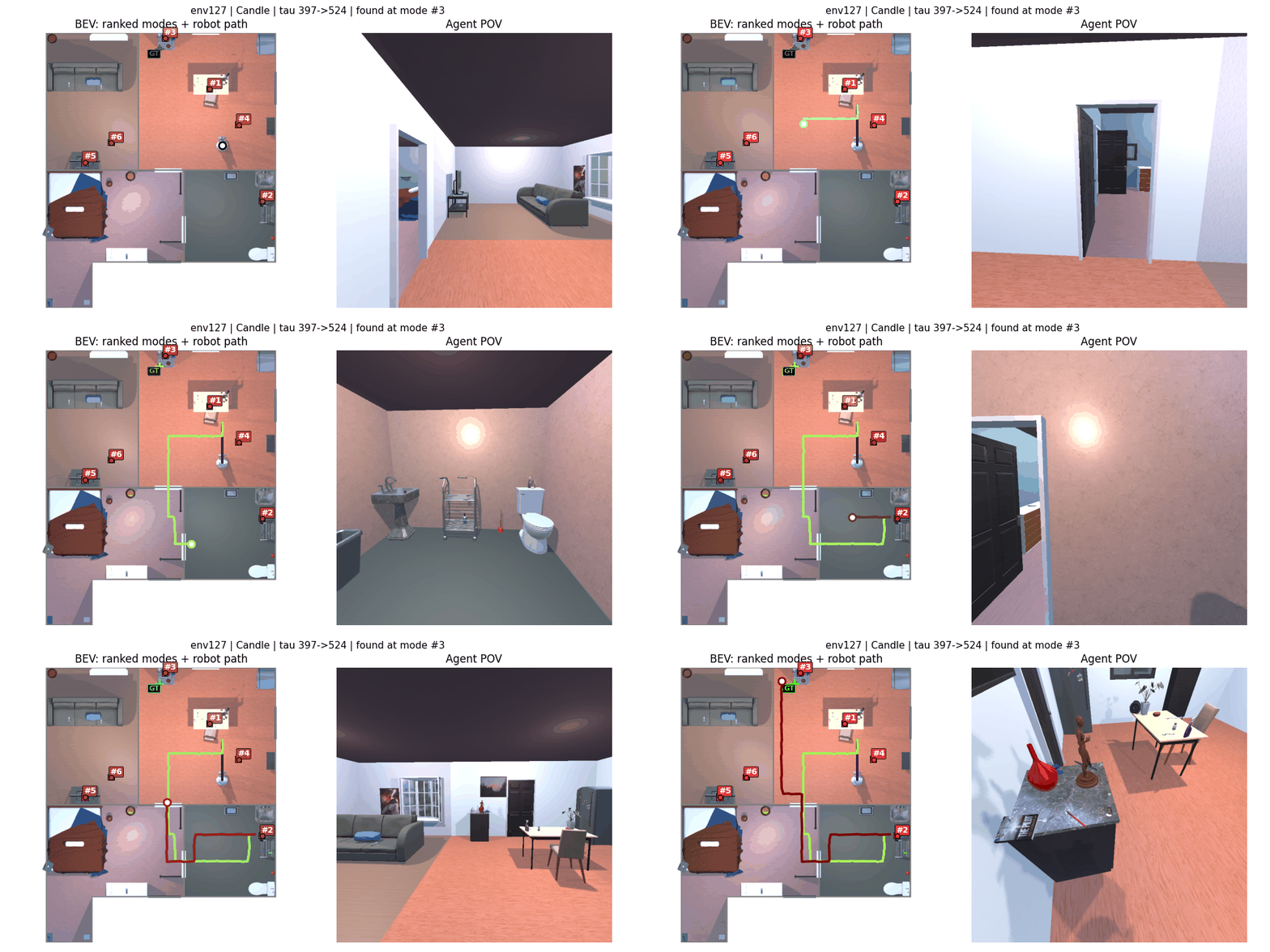
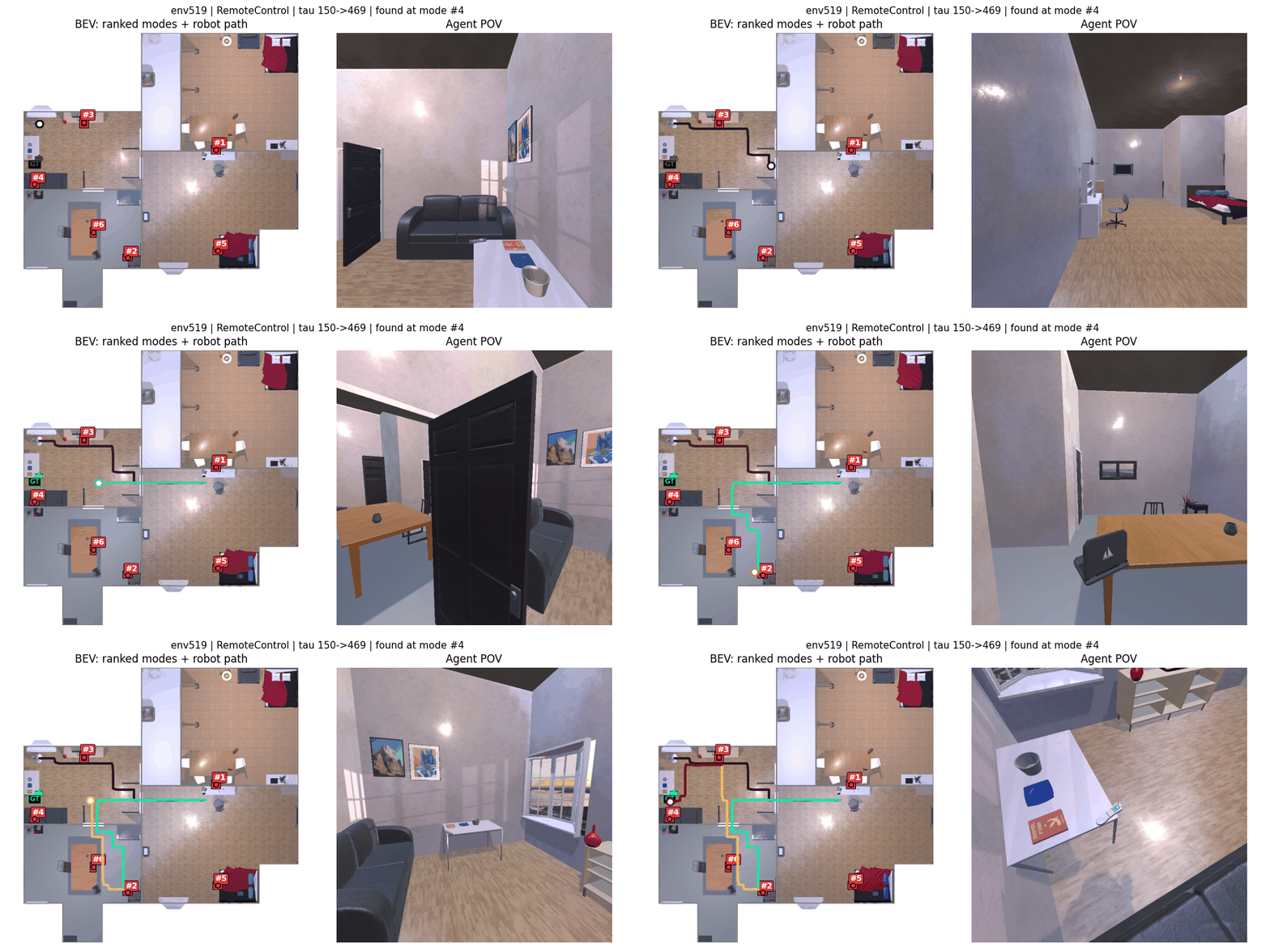
We deploy FlowMaps on dynamic Object Navigation (ObjNav), our primary downstream application. Given a queried object, FlowMaps predicts where it is likely to have moved and directs the robot toward the most probable locations, recovering gracefully from failed retrievals by reasoning over the full multimodal distribution.


Qualitative ObjNav rollouts. Left: bird's-eye view with FlowMaps' ranked predicted modes (#1–#4), the ground-truth object location (GT) and the robot's path. Right: the agent's point of view as it visits the predicted locations in order until the object is found.
| Method | SR@1 ↑ | SR@5 ↑ | SR@10 ↑ | mSR ↑ | SPL@1 ↑ | SPL@5 ↑ | SPL@10 ↑ | mSPL ↑ | Path (m) ↓ | Steps ↓ |
|---|---|---|---|---|---|---|---|---|---|---|
| Habit #1 — location preferences | ||||||||||
| Naive LLM | 42.13 | 59.34 | 63.77 | 57.44 | 33.54 | 38.40 | 39.03 | 37.80 | 12.01 | 195.1 |
| TAP-LGX | 35.25 | 57.05 | 62.62 | 54.03 | 28.88 | 40.03 | 44.00 | 43.62 | 10.62 | 193.6 |
| OSG+SP | 18.69 | 56.89 | 64.10 | 51.85 | 15.34 | 31.46 | 33.21 | 29.29 | 12.99 | 224.3 |
| OSG+LLM | 42.79 | 62.46 | 63.44 | 60.13 | 34.65 | 44.03 | 44.27 | 42.90 | 8.38 | 131.9 |
| CEG+SP | 22.30 | 58.03 | 64.75 | 52.66 | 18.16 | 33.32 | 34.82 | 30.98 | 12.42 | 212.7 |
| CEG+LLM | 42.95 | 62.62 | 63.61 | 60.29 | 34.93 | 44.57 | 44.81 | 43.40 | 8.00 | 126.3 |
| SGM | 48.36 | 69.18 | 71.80 | 67.26 | 38.74 | 46.52 | 46.84 | 45.64 | 8.82 | 137.4 |
| HOMER | 46.72 | 67.54 | 69.84 | 64.46 | 37.31 | 44.59 | 44.98 | 43.62 | 9.29 | 145.9 |
| FlowMaps (ours) | 57.70 | 71.15 | 73.62 | 69.26 | 45.31 | 49.52 | 49.72 | 48.95 | 9.01 | 111.1 |
| Habit #2 — balanced routine | ||||||||||
| Naive LLM | 39.02 | 58.52 | 60.66 | 55.46 | 31.30 | 37.95 | 38.21 | 36.94 | 8.72 | 135.2 |
| TAP-LGX | 34.26 | 54.92 | 61.64 | 53.57 | 28.12 | 40.73 | 43.18 | 39.47 | 10.98 | 199.6 |
| OSG+SP | 19.18 | 57.38 | 66.07 | 52.69 | 15.74 | 32.03 | 34.49 | 29.99 | 13.37 | 233.3 |
| OSG+LLM | 36.89 | 47.38 | 50.16 | 46.43 | 29.85 | 34.97 | 35.69 | 34.40 | 8.18 | 129.5 |
| CEG+SP | 22.46 | 58.36 | 65.74 | 53.08 | 18.31 | 33.39 | 35.27 | 31.17 | 12.29 | 212.6 |
| CEG+LLM | 37.38 | 48.20 | 50.98 | 47.25 | 30.11 | 35.47 | 36.17 | 34.90 | 8.02 | 127.5 |
| SGM | 47.54 | 66.23 | 68.52 | 63.85 | 38.07 | 44.83 | 45.14 | 43.94 | 7.76 | 117.6 |
| HOMER | 41.48 | 67.38 | 69.18 | 62.90 | 33.59 | 41.65 | 41.85 | 40.37 | 8.79 | 135.4 |
| FlowMaps (ours) | 50.49 | 66.56 | 67.21 | 63.92 | 41.18 | 46.51 | 46.59 | 45.72 | 7.55 | 113.5 |
| Habit #3 — highly dynamic routine | ||||||||||
| Naive LLM | 41.15 | 56.23 | 61.48 | 55.46 | 33.52 | 38.31 | 39.21 | 37.89 | 9.45 | 145.1 |
| TAP-LGX | 36.72 | 57.05 | 64.10 | 55.61 | 29.82 | 42.30 | 44.86 | 40.97 | 9.37 | 163.0 |
| OSG+SP | 15.90 | 56.23 | 65.25 | 51.21 | 12.95 | 31.00 | 33.31 | 28.55 | 11.92 | 207.0 |
| OSG+LLM | 38.52 | 54.26 | 55.74 | 52.33 | 31.72 | 38.97 | 39.33 | 38.04 | 7.68 | 115.7 |
| CEG+SP | 18.52 | 57.21 | 64.43 | 52.21 | 14.85 | 31.48 | 33.30 | 29.37 | 11.54 | 199.2 |
| CEG+LLM | 38.03 | 54.10 | 55.74 | 52.00 | 31.23 | 38.59 | 38.93 | 37.62 | 7.91 | 119.1 |
| SGM | 27.21 | 62.62 | 65.41 | 56.84 | 22.19 | 33.64 | 34.02 | 31.84 | 12.24 | 198.1 |
| HOMER | 38.03 | 62.95 | 65.74 | 58.93 | 30.29 | 38.55 | 38.94 | 37.25 | 11.51 | 186.9 |
| FlowMaps (ours) | 50.98 | 66.72 | 68.20 | 64.39 | 41.07 | 45.99 | 46.17 | 45.30 | 7.90 | 117.4 |
Dynamic Object Navigation results, grouped by the three habits, over 600+ episodes in disjoint, previously unseen environments. SR / SPL are reported at K = 1, 5, 10 candidate locations, along with mean SR / SPL, path length and step count. Bold marks the best per column; FlowMaps rows are highlighted.
@article{argenziano2026flowmaps,
title = {FlowMaps: Modeling Long-Term Multimodal Object Dynamics with Flow Matching},
author = {Argenziano, Francesco and Saavedra-Ruiz, Miguel and Morin, Sacha
and Gauthier, Charlie and Nardi, Daniele and Paull, Liam},
year = {2026}
}